












Breakthrough in Abu Dhabi: Ukraine Agrees to Core Terms of 19-Point US Peace Plan Amidst Continued Airstrikes
Breaking: Ukraine reportedly agrees to the core terms of a revised 19-point US peace framework. Envoys race to Moscow to finalize the deal despite ongoing attacks.
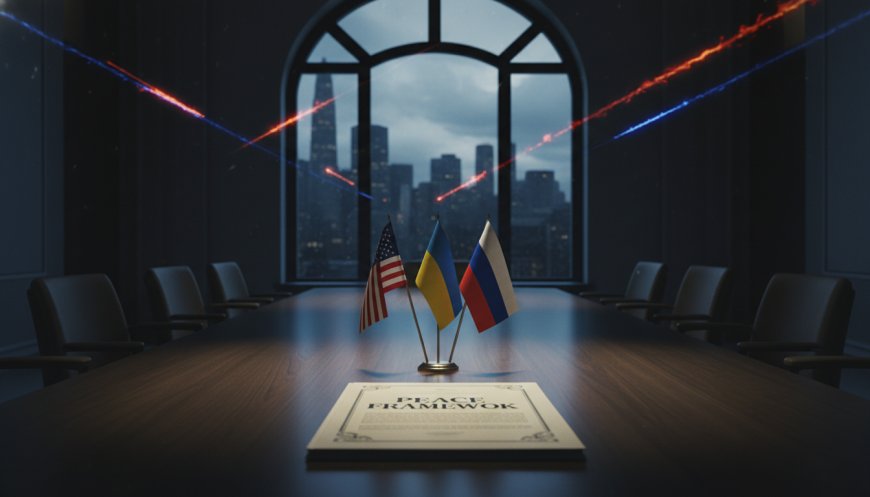
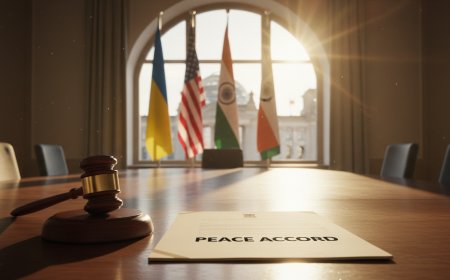
ABU DHABI — In a potential turning point for the nearly four-year-old conflict, Ukrainian officials have reportedly agreed to the "core terms" of a revised United States peace proposal, narrowing the diplomatic gap significantly even as Russian missiles continued to pound Kyiv overnight.
Sources close to the high-stakes negotiations in Abu Dhabi and Geneva confirmed to LokTimes on Wednesday that the original 28-point framework proposed by the Trump administration has been whittled down to a streamlined **19-point plan**. While the Kremlin has cautioned that it is "premature" to declare a final resolution, the diplomatic momentum is undeniable, with US envoys now pivoting to Moscow to secure President Vladimir Putin’s buy-in.
### The 19-Point Framework: What We Know
The refined proposal represents a pragmatic, albeit painful, compromise for Kyiv. According to diplomatic insiders briefed on the talks, the agreement hinges on a "de facto" rather than "de jure" recognition of territorial realities.
**Key provisions reportedly include:**
1. **Territorial Freeze:** A ceasefire along the current contact line. Ukraine would not legally recognize Russia's sovereignty over occupied territories (including Crimea and the Donbas) but would agree to a long-term suspension of military efforts to retake them.
2. **NATO Status:** The issue of Ukraine’s NATO accession would be handled via the alliance's "consensus" mechanism—effectively pausing Kyiv's bid for an extended period without a formal ban, satisfying a key Russian demand while allowing Ukraine to save face.
3. **Security Guarantees:** In exchange for neutrality, Ukraine would receive robust, bilateral security commitments from the US and European partners, described by President Volodymyr Zelenskyy as needing to be "robust mechanisms, not just paper guarantees."
4. **Demilitarized Zones:** The establishment of buffer zones along the frontline, monitored by an international coalition, though the exact composition of this peacekeeping force remains a sticking point.
"The Ukrainians have agreed to the peace deal," a senior US official told reporters on condition of anonymity early Wednesday. "There are minor details to be sorted out, particularly regarding the sequencing of sanctions relief, but the core architecture is in place."
### The Diplomatic Blitz
The breakthrough follows a frantic 48 hours of shuttle diplomacy. **US Army Secretary Dan Driscoll** has been leading marathon sessions in Abu Dhabi, acting as the primary intermediary between Ukrainian representatives and Russian delegates.
Simultaneously, President Trump announced on his social media platform Truth Social that he has dispatched his new Special Envoy, **Steve Witkoff**, directly to Moscow. Witkoff’s mission is to present the "fine-tuned" plan to Vladimir Putin and iron out the remaining friction points.
"I look forward to hopefully meeting with President Zelenskyy and President Putin soon, but ONLY when the deal to end this War is FINAL," Trump wrote, aiming to secure a foreign policy victory before the Thanksgiving holiday—a deadline he has reportedly pressed his team to meet.
### War in the Shadow of Peace
The irony of the diplomatic progress is the violent backdrop against which it is unfolding. Just hours before the consensus in Abu Dhabi was leaked, Russia launched one of its largest combined aerial attacks of the year.
Overnight, Ukrainian air defenses battled a swarm of **464 drones and 22 missiles**, including hypersonic Kinzhals, targeting energy infrastructure in Kyiv and surrounding regions. The strikes left at least seven dead and plunged parts of the capital into darkness. Analysts suggest the Kremlin is using these attacks to maximize leverage, signaling that its military machine remains potent despite the negotiations.
"Putin is trying to negotiate with missiles because he realizes he cannot achieve total victory on the battlefield," said Estonian Prime Minister Kaja Kallas in a statement to European allies. "We must ensure this peace does not reward aggression."
### Reactions and Hurdles
While Kyiv has signaled assent, the reaction from Moscow has been tepid but not dismissive. Kremlin aide Yuri Ushakov stated on Wednesday that while "aspects" of the new US draft are viewed positively, the document requires "truly serious analysis." The Russians are reportedly pushing for more explicit language regarding the lifting of Western sanctions—a demand that remains politically toxic in Washington and Brussels.
President Zelenskyy, facing exhaustion at home and pressure from Washington, has walked a tightrope. In a video address to the "Coalition of the Willing" on Tuesday, he acknowledged the necessity of moving forward with the US plan but emphasized that Ukraine would not trade its sovereignty. "We are ready for a real peace, but it must be a peace with dignity, not capitulation," Zelenskyy said.
The resignation of **Keith Kellogg**, the former US envoy who helped draft the initial proposal, has also raised eyebrows. Kellogg’s departure earlier this week signals a shift in the Trump administration's strategy, with Witkoff taking a more direct, transactional approach favored by the White House inner circle.
### What Comes Next?
All eyes are now on Witkoff’s arrival in Moscow. If Putin agrees to the 19-point basis, a summit between the leaders could be arranged within days, possibly at Mar-a-Lago.
For now, the guns are still firing, but the pen is finally moving across the paper. The next 24 hours will determine if this is the end of the war, or merely another pause in the bloodshed.
What's Your Reaction?








Anderson Cooper
Anderson Cooper – Veteran Journalist Located in Africa
Anderson Cooper is a distinguished 61-year-old journalist who has dedicated his life to the pursuit of truth and impactful storytelling. Though globally known for his work in television journalism, his current focus is rooted in Africa, where he continues to report on critical issues shaping the continent and the world.
With decades of experience, Cooper has built a reputation for courage, integrity, and insightful reporting. His journalism has spanned politics, international conflicts, humanitarian crises, and stories of social change. By being based in Africa, he has brought global attention to underreported narratives, highlighting the challenges and resilience of communities across the region.
Known for his empathetic approach and fearless reporting, Anderson Cooper embodies the principles of journalism that prioritize truth, awareness, and public service. At 61, his career continues to inspire aspiring journalists worldwide, proving that passion for storytelling knows no boundaries.